Next-Generation
Exosome Therapy
For patients who need more than PRP can provide — exosomes carry 1,000+ bioactive growth factors and microRNA signals that drive deeper cellular repair.
Learn MorePlatelet-rich plasma and advanced orthobiologic preparations harness the healing power already inside your bloodstream — concentrated and delivered with precision to promote repair of joints, tendons, and ligaments without surgery.
Orthobiologics are substances naturally found in the body that help promote healing of bones, muscles, tendons, and ligaments. When concentrated and delivered with precision, they support the body's own repair processes in ways conventional medicine often cannot.
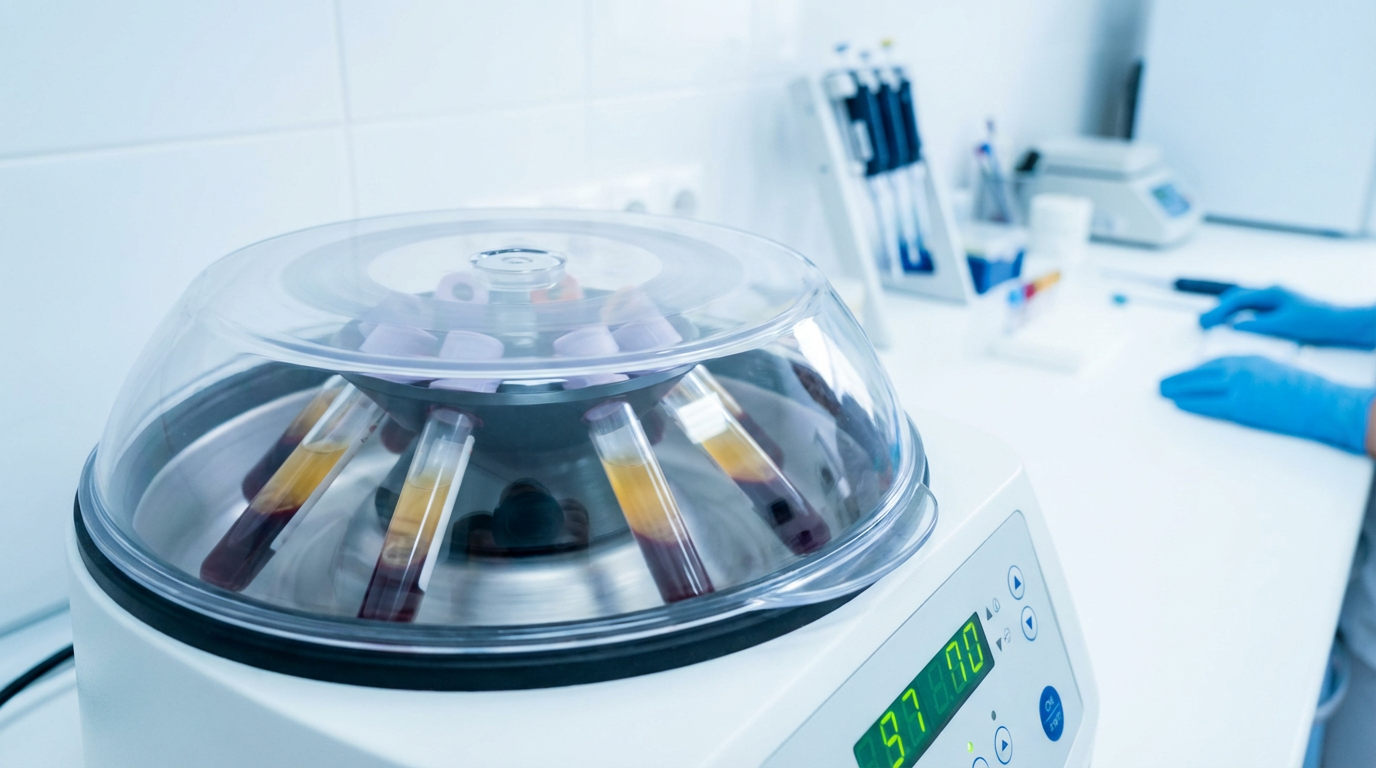
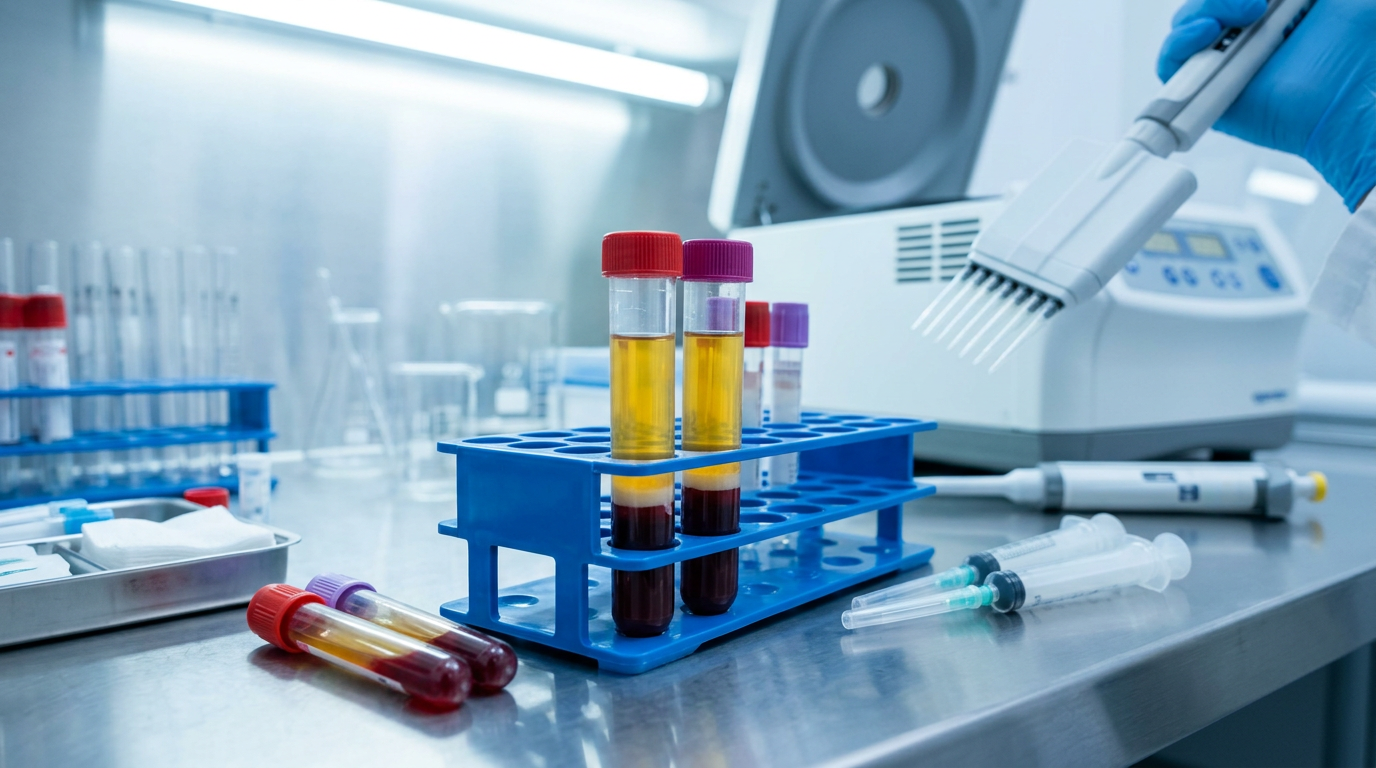
A small blood draw is centrifuged to separate platelets from red blood cells. The resulting platelet-rich fraction contains concentrations of growth factors 5–10× higher than whole blood — enough to support meaningful tissue repair.
Upon injection into damaged tissue, platelets activate and degranulate — releasing stored alpha granules containing PDGF, TGF-β, VEGF, EGF, and IGF-1. This concentrated burst of signaling molecules initiates a powerful repair cascade.
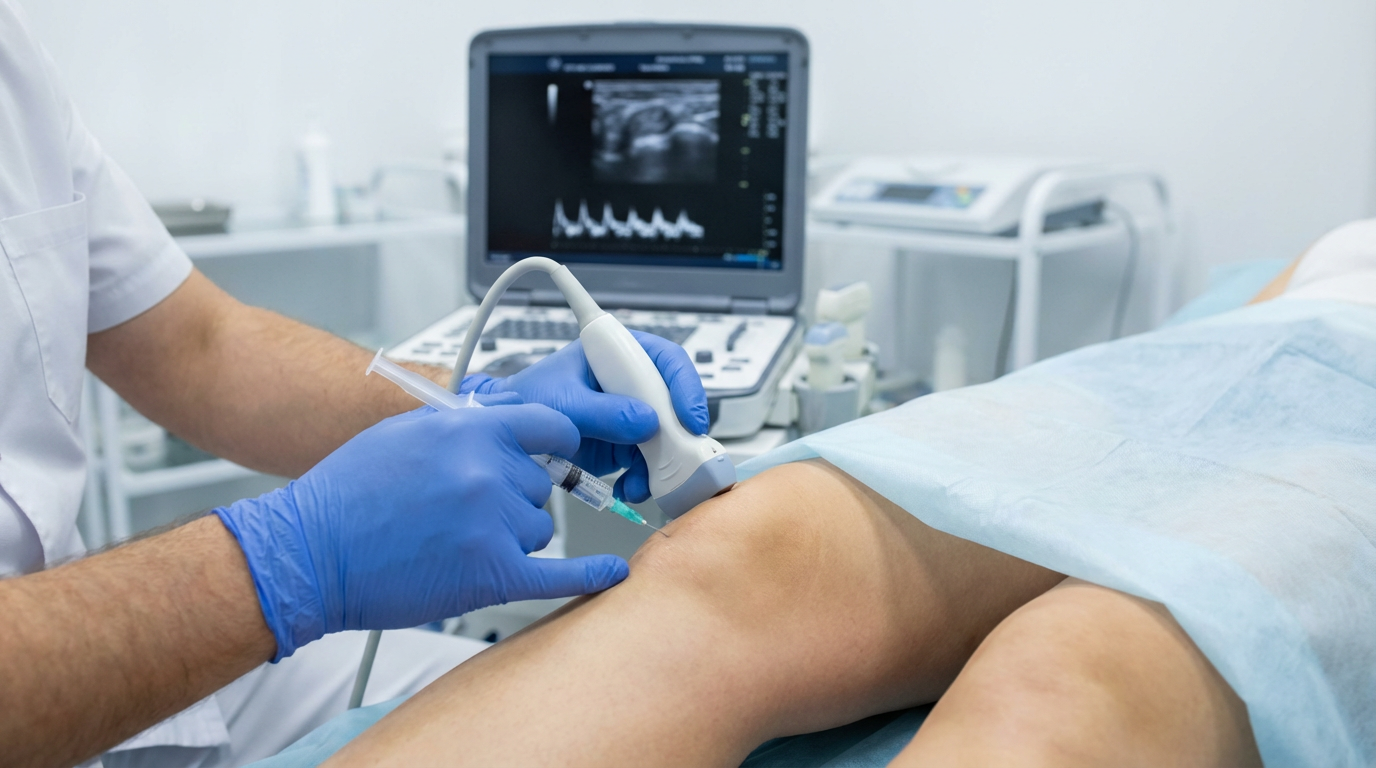
Blind injections miss the mark. At JRCU, every orthobiologic injection is guided by real-time musculoskeletal ultrasound — ensuring the preparation is delivered as precisely as possible to the target area.
Orthobiologics are a class of natural biological substances — including platelet-rich plasma, bone marrow aspirate, and amniotic preparations — used to augment the body's healing process in musculoskeletal conditions.
Platelet-rich plasma (PRP) is the most widely studied orthobiologic. It is prepared from the patient's own blood, centrifuged to concentrate platelets and their associated growth factors, and then injected into the injured or degenerating tissue. PRP is particularly well-supported by research for tendinopathies, ligament injuries, osteoarthritis, and muscle tears.
Not all orthobiologics are the same. Our providers select the optimal preparation for each patient's specific condition, biology, and treatment goals.
Blood is drawn, centrifuged, and the platelet-rich layer is separated. The resulting PRP contains 5–10× the baseline concentration of growth factors and is injected precisely into the target area.
An advanced PRP variant that retains white blood cells (leukocytes) for conditions where immune modulation of the joint environment is therapeutically beneficial alongside platelet activity.
Derived from donated amniotic tissue, these preparations contain hyaluronic acid, growth factors, cytokines, and extracellular matrix proteins that create an optimal healing environment for severely degenerated joints.
From blood draw to injection, the entire procedure is completed in-office in approximately 60–90 minutes.
A standard blood draw (typically 30–60 mL) is performed in-office. No hospital or surgical center required.
Blood is processed through a precision centrifuge that separates platelets from red blood cells, producing concentrated PRP.
PRP may be activated with calcium chloride or thrombin to initiate platelet degranulation before injection, depending on the indication.
Our provider delivers the PRP under live ultrasound guidance to the precise anatomical target — joint, tendon, ligament, or disc.
PRP and orthobiologic therapy has extensive clinical literature supporting its use across a broad range of musculoskeletal conditions.
Multiple randomized controlled trials support PRP for knee OA — reducing pain and improving function compared to hyaluronic acid and corticosteroids.
PRP accelerates tendon healing and reduces calcific deposits in partial rotator cuff tears, often eliminating the need for surgical repair.
Well-studied in athletic populations, PRP significantly improves chronic tendinopathy that has failed physical therapy and conservative care.
Intra-articular PRP injection into the hip joint reduces inflammatory cytokines and provides significant pain relief in mild to moderate OA.
PRP has demonstrated superiority over corticosteroid injection for lateral epicondylitis, with more durable results and no tendon weakening.
Partial MCL, LCL, and ankle ligament tears, as well as meniscal lesions, show improved healing rates with PRP augmentation.
Every patient receives a customized orthobiologic protocol — no generic treatments, no off-the-shelf protocols.
We review your medical history, imaging, and symptoms. Our providers determine whether PRP, amniotic biologics, or a combination protocol is indicated for your condition.
Blood work may be evaluated to confirm platelet function and baseline inflammatory markers. We identify the optimal PRP concentration and volume for your target area.
Blood draw, centrifuge, and ultrasound-guided injection — all in one visit. The procedure takes approximately 60–90 minutes and you leave under your own power.
Follow-up appointments are scheduled at 4, 8, and 12 weeks to assess response and determine whether additional treatments will maximize your outcome.
Many patients have tried cortisone shots or pain medications before discovering orthobiologics. Here's how they compare.
| Treatment | Promotes Tissue Repair | No Downtime | Long-Lasting |
|---|---|---|---|
| PRP / Orthobiologics ✓ | |||
| Cortisone Injections | |||
| NSAIDs / Pain Medication | |||
| Joint Replacement Surgery |
Because PRP is derived from your own blood, immune rejection is not a concern. The preparation process is closed and sterile. Side effects are minimal — most patients experience mild soreness at the injection site for a few days.
Patients often notice early improvements in inflammation and pain within 2–4 weeks. Structural tissue repair continues over the following months. Most patients — including those with tendinopathy and joint degeneration — typically report meaningful improvement at 6–12 weeks, with continued progress over several months.
We use validated, clinical-grade centrifuge systems with established concentration protocols. Our providers select the preparation method and platelet concentration based on your specific condition and the tissue being targeted.
Book a consultation with Devon Duplain, PA-C. We'll evaluate your condition and determine which orthobiologic preparation is right for you. Same-day treatment discount available — $100 credited toward treatment when pursued the same day (minimum $1,000 treatment).
Book My ConsultationFor patients who need more than PRP can provide — exosomes carry 1,000+ bioactive growth factors and microRNA signals that drive deeper cellular repair.
Learn MoreMesenchymal stem cells that actively differentiate into new cartilage, bone, and soft tissue — the highest level of regenerative intervention available.
Learn MoreConcentrated preparations of specific therapeutic proteins — TGF-β, IGF-1, BMP-7 — that target the exact molecular pathways needed for your condition.
Learn More