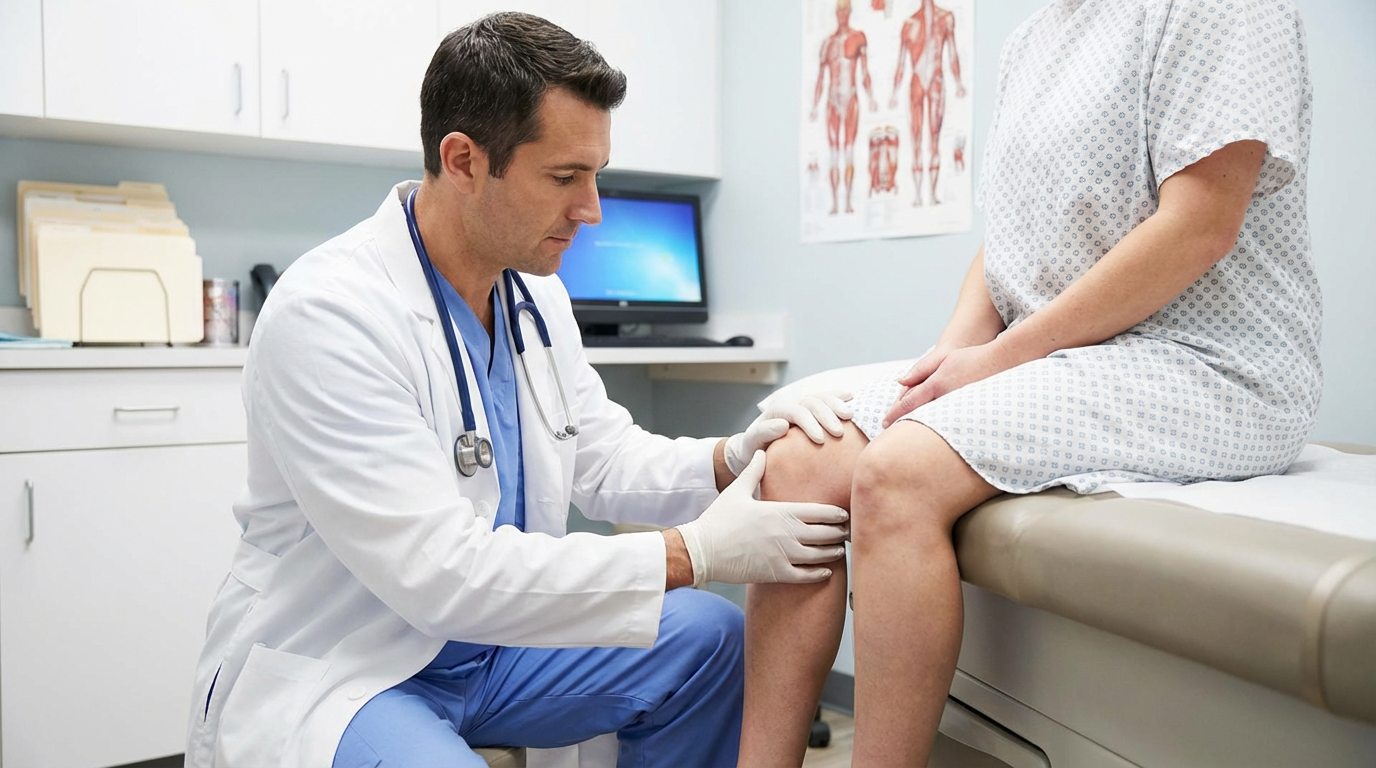
Millions of Americans are told surgery is their only option. It isn't. Advanced regenerative therapies can help you return to a more active, pain-free life — promoting healing and slowing the progression of degenerative conditions without surgery.
Knee cartilage has almost no blood supply — meaning it can't heal itself the way muscles or skin can. Once it breaks down, the joint becomes bone-on-bone, triggering chronic inflammation, pain, and loss of mobility.
Traditional medicine responds with cortisone shots, anti-inflammatories, and eventually surgery. These manage symptoms. Regenerative medicine does something different: it works with your biology to promote restoration of the tissue itself.
Precision image-guided regenerative injection — in-office, no hospitalization required.
"My knee injections have helped my knees avoid surgery for years. Just when the pain is getting noticeable it is time for my next series. After the series my knees are fine and I can enjoy any activity I want."
Knee degeneration isn't just "wear and tear" — it's a complex biological process that regenerative medicine aims to address at the source.
Articular cartilage protects bone surfaces. Once degraded, it cannot self-repair — creating a cycle of friction, inflammation, and progressive joint destruction.
Synovial inflammation floods the joint with destructive enzymes. Without intervention, it accelerates cartilage breakdown — turning mild OA into bone-on-bone pain.
As we age, the chondrocytes (cartilage cells) lose their ability to repair damage. Regenerative therapy introduces new biological signals to restart that repair process.
Sports injuries, repetitive stress, or a single acute event can initiate a degenerative cascade — especially in active patients who push through early warning signs.
From your first call to your last follow-up, we're with you every step.
We review your history, imaging, and goals. Same-day treatment discount available — $100 credited toward treatment when pursued same day (minimum $1,000 treatment).
Our provider evaluates your knee's anatomy to confirm regenerative therapy is right for you.
A precise treatment plan designed around your joint, your severity, your biology.
In-office injection series — typically under an hour. No anesthesia or hospital stay.
Monitor regeneration progress over 3–6 months with follow-up imaging and check-ins.
For many patients — yes. Regenerative therapy works best for Grade I–III osteoarthritis. Advanced bone-on-bone cases (Grade IV) may have fewer options, but even then, many patients experience meaningful pain reduction. The only way to know for certain is a proper candidacy assessment.
Most patients complete a series of 3–5 visits over 6–12 weeks. Some see significant improvement after a single session; others benefit from a complete protocol. Your plan is built around your specific condition and goals.
Inflammation reduction typically begins within 2–4 weeks. Structural regeneration typically peaks at 3–6 months. Most patients describe a gradual, progressive improvement rather than an overnight change.
Yes. Regenerative therapy doesn't close any surgical doors. Many patients use it to postpone surgery by years — and some eliminate it entirely. If surgery becomes necessary, regenerative treatment beforehand may improve surgical outcomes.
Treatment is a personalized investment based on the type of therapy, number of joints treated, and protocol complexity. During your consultation, we provide a transparent, itemized breakdown with no hidden fees. Financing options are available.
Yes — patients fly in from across the U.S. and internationally to access treatments that are only available in Utah. Our clinic is located in Murray, UT — 15 minutes from Salt Lake City International Airport. Remote consultations are available to evaluate your candidacy before you travel, and we coordinate multi-day scheduling for out-of-state and international patients.